

The Heritage Science Laboratory Ljubljana is excited to announce two new research projects funded by the Slovenian Research and Innovation Agency (ARIS), ARISE and TraceInk, total amount €620k, as well as a major funding grant for new research equipment: Isotope Ratio Mass Spectrometry and E-RIHS.si Mobile Lab, total amount €1m.
Advancing the Metrology of Desorption Electrospray Ionization Mass Spectrometry Imaging (“ARISE”) is a two-year postdoc research project led by Dr Tjaša Rijavec. ARISE will focus on advancing the understanding of desorption electrospray ionization mass spectrometry imaging (DESI-MSI) by implementing a definition for spatial resolution with designing test targets and studying the immediate and long-term effects of DESI-MSI on sensitive materials, providing a best-practice guide for a minimally invasive analysis. Properly establishing the DESI-MS metrology parameters is crucial for its wider acceptance in E-RIHS, EuroBioImaging and MetroFood research infrastructures.

Figure 1: Graphical abstract of the ARISE project.
The “Trace-Ink” research project on the characterisation of iron gall inks in ancient Egyptian papyri and Islamic paper will be led by Dr Abdelrazek Elnaggar. The project will trace the production and reconstruct the chronological scale of iron gall inks providing the so far elusive knowledge of the distribution of IGI components in papyrus and paper.
Through archaeological, archival and historical research, object surveys in use of state-of-the-art research equipment the project will characterise material histories and timelines, develop understanding of historical contexts, and inform conservation and archaeological research. Material characterisation will include hyperspectral imaging (HSI), Desorption Electrospray Ionization-Mass Spectroscopy (DESI-MS), and Secondary Ion Mass Spectrometry (SIMS), X-ray Photoelectron spectroscopy (XPS), Near Infrared Spectroscopy (NIR), and Raman & X-ray Fluorescence spectroscopy (XRF) on papyrus and paper supports from collections in Slovenia and Egypt, reinforcing the pre-existing collaboration between Slovenian and Egyptian networks.
The research team will involve the Heritage Science Lab, the Laboratory for Analytical Chemistry and Industrial Analysis at the University of Maribor, and the Slovene Ethnographic Museum as well as Ain Shams University (Egypt) and the Egyptian Museum in Cairo (EMC).
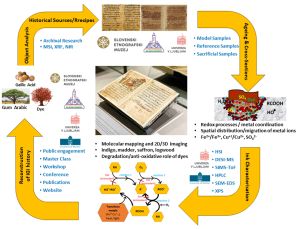
Figure 2: Graphical abstract for the TraceInk project.
The HSLL is also delighted to announce investment into a major new piece of equipment, isotope ratio mass spectrometry. The technique will be used to reconstruct past diets, mobility, environments, and chronologies by measuring stable isotope ratios in archaeological materials. IRMS measures ratios such as ¹³C/¹²C and ¹⁵N/¹⁴N in bone collagen, tooth dentine, and charred food remains, reflecting marine vs terrestrial food consumption, local drinking water, which varies with climate and geography, seasonal climate variation during site occupation, detect episodes of nutritional stress or famine, by integrating biology, chemistry, and archaeology. The IRMS will become an integral part of the GreenHer Archaeology Lab, a research facility shared by three faculties of the University of Ljubljana: Faculty of Arts, Biotechnical Faculty and Faculty of Chemistry and Chemical Technology.
In addition, HSLL will invest into a range of new portable instruments: a fibre-optics based NIR spectrometer, a digital image correlation system, a thermal camera, a 3D scanner, and a multispectral imaging setup.
All the equipment is jointly funded by the Slovenian Agency for Research and Innovation, the Slovenian node of the European Research Infrastructure for Heritage Science, Faculty of Chemistry and Chemical Technology and Faculty of Arts of the University of Ljubljana, as well as individual project funding.
